
In Florida premises liability cases, circumstantial evidence can prove causation—but only up to a point. A plaintiff cannot ask a jury to infer one disputed fact and then use that inference as the foundation for another disputed fact unless the first inference is established to the exclusion of every other reasonable inference.
This rule, commonly called the prohibition against the stacking of inferences, matters most in slip-and-fall, trip-and-fall, and transitory foreign substance cases. The issue often arises where no witness saw what caused the fall, the plaintiff cannot identify the alleged hazard, or the evidence reveals several plausible explanations for the incident.
What Is “Stacking of Inferences”?
An inference is a conclusion drawn from proven facts. Florida law permits reasonable inferences from circumstantial evidence. But a party cannot establish liability by building a second inference on top of a first inference that is itself uncertain or debatable.
The Florida Supreme Court explained the rule in Voelker v. Combined Insurance Co. of America, 73 So. 2d 403 (Fla. 1954). When circumstantial evidence is used to establish an initial fact, that initial inference cannot support a further inference unless the initial inference has been established to the exclusion of all other reasonable inferences.
Put simply, a jury may draw reasonable conclusions from evidence, but it may not fill a chain of missing links with speculation.
The rule does not prohibit circumstantial evidence. Many civil cases are properly proven with circumstantial evidence. Instead, the rule prevents a litigant from treating a possibility as a fact and then using that assumed fact to establish another essential element of a claim. That is the essence of the stacking of inferences rule in Florida.
A Common Premises Liability Example
Consider a customer who falls near a dark, dirty, or wet-looking area on a store floor. No one saw the customer step in the area. The customer cannot identify what caused the fall. There are no wet clothes, footprints, skid marks, photographs, video evidence, or witness testimony connecting the customer to the condition.
To establish causation, the claimant may need the jury to infer first that the customer walked through or contacted the alleged condition. The claimant may then ask the jury to infer that the condition caused the customer to slip or fall.
If the first inference—that the customer contacted the condition—is not established to the exclusion of other reasonable explanations, the second inference cannot be built upon it. The fact that a person fell near a condition does not itself prove that the condition caused the fall.
That distinction is critical in Florida premises liability litigation. Evidence that a condition existed is not necessarily evidence that it caused the incident. And evidence that an accident occurred is not, by itself, evidence of negligence.
The Florida Cases on Stacking of Inferences
Florida courts have applied the prohibition against stacking inferences for decades in premises liability and other negligence cases.
In Voelker v. Combined Insurance Co. of America, 73 So. 2d 403 (Fla. 1954), the Florida Supreme Court articulated the foundational rule. A party generally may not construct one inference on another inference unless the initial inference is so established that no contrary reasonable inference remains.
The decision does not prohibit circumstantial proof. Instead, it requires that the first step in the reasoning process be supported by evidence strong enough to make competing explanations unreasonable.
In Nielsen v. City of Sarasota, 117 So. 2d 731 (Fla. 1960), the Florida Supreme Court confirmed that a fact may be proven by circumstantial evidence as effectively as by direct evidence. But where a party relies on an inference to prove one fact and then relies on that inferred fact to prove another, the original inference must be established to the exclusion of all other reasonable inferences.
The rule is therefore not anti-circumstantial-evidence. It is anti-speculation.
In Green House, Inc. v. Thiermann, 288 So. 2d 566 (Fla. 2d DCA 1974), the Second District Court of Appeal applied the rule in a premises liability setting. The evidence did not establish where the plaintiff walked after leaving a store or what caused his fall near a parking curb stop.
To conclude that the curb stop caused the fall, a jury first would have had to infer that the plaintiff’s path crossed the curb stop and then infer that he tripped over it. The Second District held that this was impermissible inference stacking because the first inference was not established to the exclusion of other reasonable possibilities. The court directed a verdict for the defendant.
Green House remains a useful illustration of the difference between a hazard being near the location of a fall and evidence that the hazard actually caused the fall.
In North American Co. v. Landahl, 113 So. 2d 588 (Fla. 2d DCA 1959), the Second District likewise rejected a trip-and-fall theory built on uncertain circumstantial evidence. Where neither the plaintiff nor the witness knew or saw what caused the fall, a verdict cannot rest on a speculative reconstruction of the accident.
The practical point is straightforward. A plaintiff must show more than an accident near a potentially dangerous condition. The record must support a reasonable causal connection between the condition and the injury.
In Williams v. Sears, Roebuck & Co., 866 So. 2d 122 (Fla. 4th DCA 2004), the Fourth District Court of Appeal affirmed summary judgment for the store where the plaintiff alleged she slipped but did not know whether she had slipped on oil, dirt, water, or anything else. She did not see a substance before or after the fall, and the record contained no competent evidence identifying a foreign substance as the cause.
The court rejected the argument that a fall itself permits an inference that the premises owner negligently maintained the floor. A plaintiff cannot defeat summary judgment merely by asserting that because she slipped, there must have been a foreign substance that caused the incident.
In Cassel v. Price, 396 So. 2d 258 (Fla. 1st DCA 1981), the First District Court of Appeal reiterated the basic negligence principle that the mere occurrence of an accident does not create an inference of negligence. The case is frequently useful when a party attempts to substitute the fact of injury for proof of a dangerous condition, breach, notice, or legal causation.
Why This Matters in Florida Slip-and-Fall Cases
The prohibition against the stacking of inferences can be outcome-determinative where the plaintiff’s theory depends on a series of assumptions. This occurs frequently in cases involving alleged water, dirt, residue, leaking bags, track marks, unclear video, or a condition observed only after the incident.
For example, a claimant may argue that a store employee pushed a cart through an area before a fall, that the cart must have leaked, that liquid must have remained on the floor, and that the liquid must have caused the fall. If the record does not independently support each link, the argument is not a reasonable inference. It is a chain of speculation.
Florida’s transitory foreign substance statute, section 768.0755, also requires evidence of the specific dangerous condition and the defendant’s actual or constructive knowledge of it. A plaintiff cannot establish the existence of a substance, causation, and notice by piling one debatable inference upon another.
The distinction becomes especially important at summary judgment or directed verdict. A court may not weigh competing evidence or choose between reasonable factual inferences. But a court is not required to send a case to a jury when the evidence does no more than invite speculation about what may have happened.
Practice Points
For property owners, businesses, and insurers, the key is to isolate each required element: the existence of a condition, the condition’s dangerous character, causation, notice, and damages. Do not allow a party to treat proof of one element as proof of all the others.
Preserving the record is essential. Surveillance video, inspection records, incident reports, photographs, employee testimony, weather evidence, maintenance records, and evidence showing alternative explanations for the fall can all be important. A careful record may demonstrate that the causal theory rests not on evidence, but on stacked assumptions. Careful defense preparation exposes the stacking of inferences problem before trial.
For plaintiffs, the same rule highlights the importance of promptly documenting the scene and connecting the alleged condition to the incident through competent evidence. Witness testimony, photographs, video, physical evidence, prior complaints, inspection records, and expert testimony can make the difference between a permissible inference and an impermissible stacking of inferences.
The dividing line is not whether a case uses circumstantial evidence. Many valid civil cases do. The question is whether the evidence supports each necessary inference or instead asks the jury to guess its way from an accident to liability.
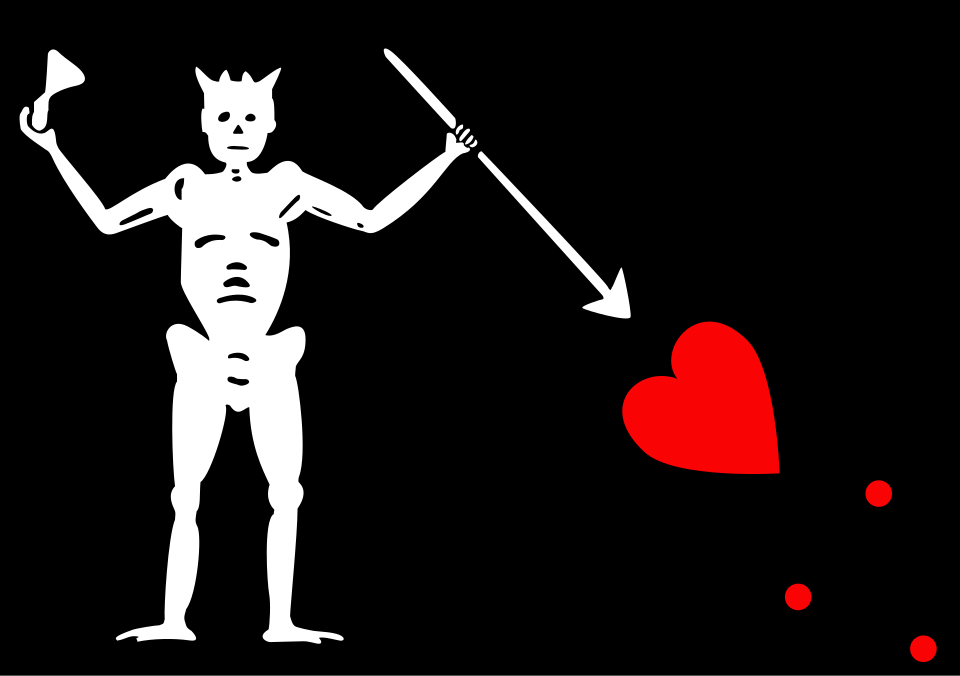
(And no — despite the temptation, a jury may not infer causation the way Edward Teach inferred cargo: by spotting a promising vessel and hoisting the black flag. The stacking-of-inferences rule requires each link to be established to the exclusion of other reasonable inferences before the next may be built on it.)
Contact Cox Law, PLLC
Cox Law, PLLC handles Florida premises liability and civil litigation matters involving slip-and-fall claims, transitory foreign substances, causation disputes, notice issues, motions for summary judgment, and appeals. Whether the case turns on the stacking of inferences or another causation issue, careful record-building is essential. If you are evaluating a Florida premises liability claim or defense, contact Cox Law, PLLC to discuss your options.
Disclaimer: This post provides general legal information only and is not legal advice. Reading it does not create an attorney-client relationship. The outcome of any case depends on its particular facts, evidence, procedural posture, and current law.